PSDS logotitle

spacer

spacer

border curve TRAINING


PUBLIC ACCESS STANDARD


The purpose of the Psychiatric Service Dog Society (PSDS) ‘public access standard’ is to provide a focal point for owner-trainers as they embark upon public access training with their Psychiatric Service Dog (PSD) In-Training. The standard is also helpful to professional dog trainers who are working with PSD clients and training, perhaps for the first time, in the public access arena. Given geographic diversity, not every team will choose, or even be able, to master every element described in this ‘public access standard’. In some rural areas, for example, escalators are nowhere to be found. And, for others with mobility issues, especially those affecting balance, an escalator is not a safe place to train one’s dog. Handlers in these situations may choose to focus on elevator work, instead, and that’s OK. Think of the PSDS ‘public access standard’ as a series of lesson plans from which you may pick and choose. Taken together they offer a ‘roadmap’ of sorts for mastering the many challenges of public access.


Mastering Basic Obedience First:


Please don’t rush your dog into public access training. Before embarking on this advanced phase of your dog’s training, make sure that it has fully mastered the behaviors of basic obedience, such as ‘sit, down, stay, come, wait, go, back’, etcetera. Hopefully, you will have trained your dog to respond to verbal commands and hand signals, as the latter are helpful when one needs to direct a dog in a public setting where silence prevails, such as libraries, movie theaters, and during others’ presentations.


The Importance of Off-leash Training:


Your dog should be trained to reliably execute basic obedience behaviors both, on and off-lead. There is no substitute for off-lead training of one’s service dog, as sometimes leashes are accidentally dropped, collars become undone, or someone leaves a door open that should, otherwise, have been closed. The emphasis in training one’s Service Dog should be on maintaining control of your dog and being responsible in any situation that could possibly arise, including your own incapacitation.


Public Access Disqualifying Behaviors:


Finally, and with regard to public access training, specifically, any dog that demonstrates boisterous behavior, hackles-up, growling, showing teeth, lunging, biting, or inappropriate elimination is not ready for public access work. If your dog is engaging in any of these behaviors, whether they are directed at humans, or other animals in the vicinity, then you need to remove the dog from public spaces and consult with your trainer, in order to rectify problem behaviors. Remember, when you and your Service Dog In-Training are out in public, you are representing all Service Dog teams. Thus, don’t jump the gun. Take the time to do things right.


Car Travel Safety: Physical safety of one’s service dog must be ensured while handler is driving. This may entail handler’s use of a dog crate in the vehicle, use of a canine seat belt, or the presence of a physical partition that protects the dog from being thrown through the windshield in the event of an accident.


Unloading from a vehicle without distractions: Dog should be tested in unloading from handler’s vehicle. Dog should not exit the vehicle until its handler gives the appropriate command to exit the vehicle. Once outside the vehicle, the dog must remain within 4 feet of the vehicle (instead of wandering away) and out of any obvious danger.


Unloading from a vehicle with distractions: As soon as the service dog has exited the vehicle, a second team should walk by within 6 feet of the first team. The service dog on the first team should not approach or in any way lunge towards the second team as it strolls past.


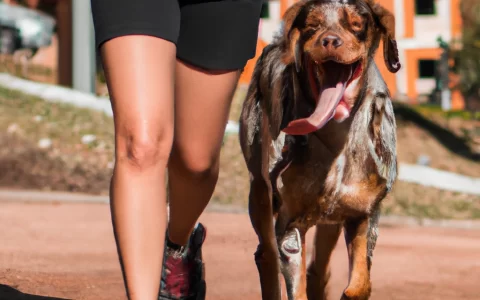
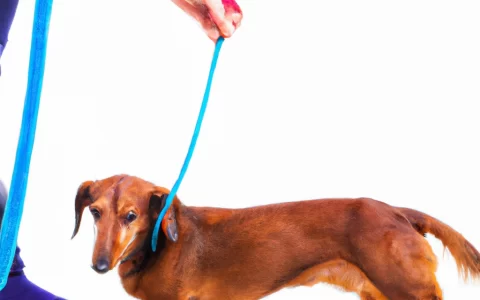
Approaching a building: In the absence of any physical disability in the handler, the dog should walk alongside its handler on a loose leash. Said dog should not pull on its leash, stop to sniff objects, greet other people, or pee while in transit, unless specifically cued to do so, by its handler. When a handler is mobility-impaired, s/he may use a harness instead of a leash, in which case a ‘loose leash’ requirement is moot. In some cases, handlers with mobility issues use a leash and have trained their dog to pull them forward. Obviously, a ‘loose leash’ requirement in this instance is also unnecessary.


Entry into a building: In the absence of any physical disability in the handler, the dog should enter the building via a door that its handler must open manually. This should be repeated using a door that opens automatically. While entering the building, the dog should continue to be on a loose lead without pulling. The dog should not rush ahead of the handler as the team enters the building, nor should the dog startle when entry is through an automatic door. When a handler is mobility impaired, s/he may choose to forgo entry into the building using a manual door and instead use a designated ‘disability entrance’ and an electronic ‘button’ for opening the door automatically.


Moving through a store with distractions: The team should enter a busy store. The dog should be on loose lead in the heel position (save for those situations described above whereby handler is physically disabled and requires an alternate format). As the team moves through the store, the dog should turn corners synchronously with the handler. Dog should stop when handler stops. Dog should not brush-up against merchandise or topple items. Dog should not startle or appear frightened by shopping carts, baby strollers, and small children. Dog should not attempt to greet other people. Rather, the dog should be aware of his surroundings, while at the same time remaining focused on its handler.


Grocery Store: Team should enter a grocery store, and the handler should push a shopping cart, while the dog keeps pace alongside its handler on a loose lead. (For handlers with physical disabilities, a shopping cart may be replaced by a scooter or wheelchair, and the individual may require use of a harness or taught leash). As the team moves through the store, the dog should not sniff any food products or people while transiting the aisles. Handlers should be especially attentive when the team is near meat and cheese sections of the grocery store, as these represent greatest olfactory temptation for a dog! While in the grocery store, the handler may wish to challenge the dog’s training by placing it in a sit-stay in an area where shopping carts and people are whizzing by. The dog should not break the sit-stay, nor be fearful of the shopping carts and people, as they move about. The dog should remain focused on its handler, until cued, otherwise.


Other high distraction behaviors:

1) Handler puts dog in a down-stay in a busy public space. An assistant will step over the dog, and observe the dog’s reaction. The dog should not react other than to note the individual’s behavior. Dog should not startle, vocalize, or break the down-stay.

2) Handler puts dog in a down-stay in a busy public space. An assistant will recruit a child to come and pet the dog. The dog should not startle, vocalize, or appear threatened by contact from the child. The dog should remain impassive, tolerate the petting from the childe, but not engage with the child further. Indeed, the dog may be trained (reinforced) that under these circumstances, it should remain focused on its handler, rather than the child. Finally, the dog should persist in the down-stay until cued by its handler to do otherwise.

3) Handler puts dog in a sit-stay or a down-stay. If the dog’s tail is not already tucked, then an assistant should lightly press the dog’s tail with her shoe. The dog should not startle or display aggression towards the assistant. The dog should be trained to tuck its tail in response to such a light touch.


Mass transit: If public transportation is available in the handler’s geographic area, then the team should practice boarding and riding as many forms of public transportation that are available to them. Examples may include a subway, bus, trolley, para-transit vehicle, taxicab, or airplane. The dog should remain calm throughout the trip and disinterested in other persons present. The handler may choose to put the dog in a sit-stay or down-stay, as conditions permit. Generally speaking, a Service Dog should ride on the floorboards of a subway, bus, trolley, para-transit vehicle, taxicab or airplane, rather than the seat. On rare occasions, a service dog may be placed on a seat, when doing so is absolutely necessary, in order for the dog to provide its handler a disability-related service, or when instructed by airline personnel on board a small aircraft where the dog may not otherwise be stowed safely. Tiny Service Dogs may need to be protected from other passengers’ feet by riding in a front carrier, shoulder bag, scooter basket, or in the lap of its handler.


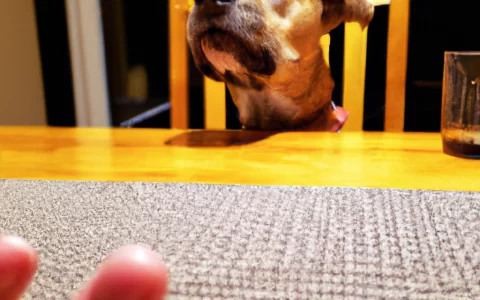
Appropriate Restaurant Behavior: The team should enter a restaurant and take a table, or wait for the hostess to seat them. While transiting the restaurant, the dog should not lunge at any food or crumbs that may be on the floor or carpet. The dog should be placed into a down-stay under the table, if physically possible, and remain there silently for the duration of the meal. Peeking-out from under the table, sniffing around, or begging for food is not permitted. If the setting will not allow the dog to remain under the table, then it may be placed in a down-stay next to, or under, the handler’s chair and out of the way of other patrons and waitpersons.


A handler should not request that a waitperson bring food or water to his/her dog; nor, should the handler surreptitiously share his/her food with the dog, while they are still inside the restaurant. These are inappropriate behaviors. Service Dogs should be fed and watered either, before or after, the handler dines in a restaurant.


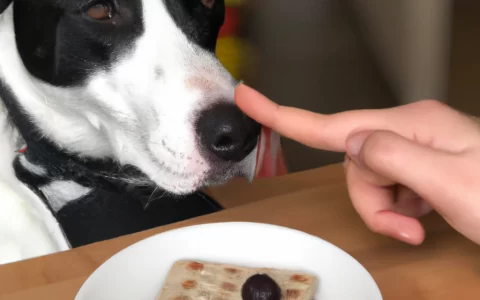
Mid-way through the meal, an assistant may challenge the dog’s training by dropping a small piece of food near the dog. A well-trained Service Dog will not break its down-stay, nor will it attempt to sniff or otherwise consume the dropped food item. When a dog behaves appropriately under these circumstances, be sure to offer it praise and a scratch on the head, as a positive reinforcement for good behavior.


Appropriate Bathroom Behavior: The team should enter a public restroom. The dog should follow its handler into the bathroom stall, if physically possible. The dog should not squirm or attempt to escape the bathroom stall, nor should it peek into adjacent stalls or whine to get out. When the handler exits the bathroom stall, the dog should move synchronously and effortlessly with its handler. When the handler washes his/her hands and/or is unable hold the leash, the dog may be placed out of the way, either in a sit-stay or a down-stay, until cued by the handler to exit the bathroom. In cases where there is no disabled bathroom stall, or where stalls are too small to fit dog and handler, the handler should place the dog in a down-stay, out of the way, while the handler uses the toilet.


Elevators: The team should enter and exit a building elevator in a controlled fashion. The dog should experience, both riding up and down, on the elevator. The dog should not startle or cower in the corner out of fear. The dog should be at ease, confident, and attentive to its handler throughout the ride. The dog may, or may not, be trained to operate elevator buttons, depending upon the handler’s disability-related needs.


Escalators: The team should practice using an escalator (ascending and descending), only if it is physically possible for the handler to do so, and safely. In other words, escalator work is optional, because if not done correctly, your dog’s feet could be seriously injured. Oftentimes, observing and then following a more experienced team on and off the escalator is helpful for a new dog to learn quickly how it is done. It is important to allow at least six steps between your team and the individual(s) in front of you on the escalator. You will see why in a moment.


When preparing to embark on the escalator, one should do so, ideally, in a full and confident stride. Hesitation or fear, on the part of the handler, will be communicated to the dog through the leash, and this is not the message a handler wants to send in these critical training moments. Most dogs will be fearful getting on an escalator for the first time. Thus, it may be necessary on the first (and possibly second) time for the handler to keep a firm grip on the leash such that the dog has ‘no option’ other than to step onto the escalator. Within 1.5 seconds of stepping on to the escalator, the handler should praise the dog profusely for his bravery, and then quickly collect oneself to prepare for stepping off the escalator shortly thereafter. A dog should never visit with others on the escalator; this is no time for socializing.


In order to step off the escalator safely, you will need to be walking at full stride. This is why you should have allowed at least six empty steps between you and the person in front of you when you first got on. In a full and confident stride, your dog will be able to step off the escalator without issue. If you hesitate, or in any way communicate fear through the leash, your dog could be injured. Some dogs prefer to pace themselves more quickly than the handler when getting off the escalator. So long as the handler is always in control of the dog, and the dog is not getting in the way of others who are stepping off the escalator at the same time, this is OK.


Escalator work is not for everyone. It requires a confident and synchronized approach on the part of handler and dog. The risk of permanent injury to your dog is real and should not be underestimated. On the other hand, for the team that has no problems with it, all the more power to you. Just realize that not everyone can do it, and that’s OK. This is what elevators are for!


Stairs: If physically possible, the handler and dog should master stairways (ascending and descending). The dog should not run up the stairs, nor should it be fearful of them. A team should be climbing stairs together in a controlled manner.


Off Lead Recall with distraction: Dog should ‘come’ when called by the handler at a distance no less than 30 feet and in the presence of high distraction. Relevant distractions may include a locus of people moving or standing around, and/or children playing, and/or the presence of another dog or multiple dogs. Dog’s recall should be rapid, deliberate and focused. Dog should not amble along, sniff, or otherwise become distracted by extraneous stimuli.


A variety of surfaces: Your Service Dog will likely encounter a variety of surfaces in the course of its travels. It could be asphalt, gravel, linoleum, cobblestones, or a metal grating of some kind. It may be glass blocks over an urban commercial kitchen, a propped-open manhole cover, or a piece of iron sheeting in a construction zone. It’s always a good idea to expose your dog to as many different surfaces as early in its life, as possible. This builds confidence in your dog, and that’s a good thing!


View the Public Access Standard Test Sheet (PDF file)


Back to Training


© 2008 Psychiatric Service Dog Society
Disclaimer: Material on this website is provided for educational purposes only.
Consult your own physician regarding the applicability of any opinions or recommendations with
respect to your symptoms or medical condition.